Wednesday, December 5, 2012

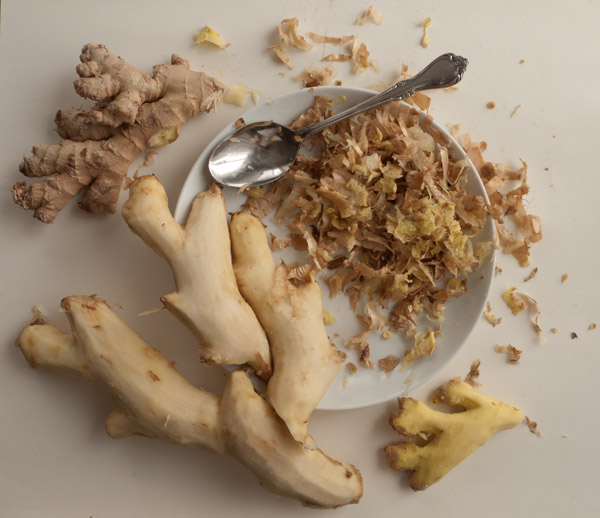
How to peel ginger... with a spoon!


peeled ginger (Zingiber officinale)

You can learn all sorts of neat tricks by spending time with culinary professionals. Or, for those of us who don't get invited over to their apartments to hang out, by reading their blogs.

Here's what I just learned from reading David Lebovitz's blog: You can peel ginger with a spoon. Apparently some other people already knew about this, but I didn't. Unlike your paring knife or vegetable peeler, a spoon will scrape the papery skin right off without taking the underlying ginger flesh with it. It even does well at working around the crevices and little knobby bits, which your peeler won't.

Also, using a spoon reduces the chance that you'll accidentally slice open your finger. Which, let me tell you, you don't want to do while cutting ginger.
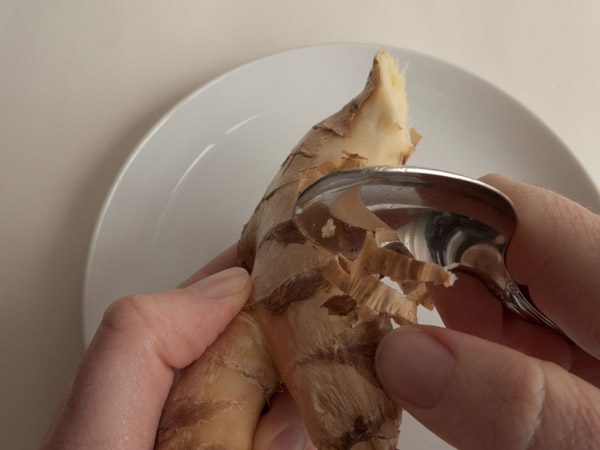
How to peel ginger with a spoon

Monday, December 3, 2012

Oatmeal cake


Piece of oatmeal cake on a fork


Blogging has caused some changes in the way I cook, especially when I'm baking. I do more measuring and less eyeballing these days, even if I'm making things up as I go along. I usually remember to take notes. And if I'm testing a recipe and make a mistake, I might even start over. 

This cake started out as a test batch of my garam masala oatmeal chocolate chip cookie recipe, until I accidentally added four eggs instead of two. This is not like doubling the amount of chocolate chips or cinnamon; those are changes that you can and should make whenever possible. Structural ingredients like eggs, milk, and flour really do matter, and while you can get away with fudging them a bit, doubling any of them is going to seriously change your texture, and probably not for the better. 

After whipping out a fresh batch of cookies (and confirming that my measurements were just right), I came back to my first bowl. It was a well-blended mess of butter, brown and white sugar, eggs, and vanilla. This is actually a pretty common base for all manner of delicious baked goods. The difference at this stage is more a matter of proportion than ingredients. I figured with two too many eggs this blend was too wet for cookies, but might be salvageable as a cake of some sort.  

As I like to tell novice bakers when they're worrying, anything whose main ingredients are butter and sugar can't taste too terrible. It might be too dense, or too gooey, or too floury, but toast the pieces up and top them with sliced strawberries and whipped cream, and you've got shortcake, no matter what you were trying to make. It is at this point that my friends get calls like, "Hey, I totally screwed up this cake (or pie, or whatever). It's weird. But not bad. You should come over and eat some of it." 

Friday, November 30, 2012

Over and over


Crimson clover (Trifolium incarnatum) seeds scattered on soil
It's been wet and grey outside lately. Better weather for making stews and braises than for clearing dead plants from the garden and sowing cover crops. But a few days ago we finally picked and ate the last of the cucumbers, and so during a break in the rain I pulled up the dying vines, tossed them in the compost heap, and planted crimson clover in their place. 

Crimson clover is another cover crop I grow to a) enrich the soil, and b) keep the garden from looking totally unkempt during the winter and early spring. You get the most benefit by digging the plants into the soil before they flower, but the flowers are just so pretty. And as long as you've let them flower, you may as well let the flowers dry, and collect them for their seeds.  

Crimson clover (Trifolium incarnatum) in flower

Monday, November 26, 2012

Pseudo-shepherd's pie


The November issue of Cook's Illustrated describes a traditional shepherd's pie that took the author 5 hours to make. I can't imagine where people who herd sheep for a living found that kind of free time, not to mention the pastry bag and star tips needed to pipe the layer of whipped potatoes over the top of the filling. (The article includes an updated, simpler recipe as well.)

As you may have gathered, I am the type of person who will spend 5 hours making peasant food, but not the day after making Thanksgiving dinner. Especially not when the fridge contains all the ingredients necessary to make a perfectly good pseudo-shepherd's pie: mashed potatoes, some sort of meat, gravy, and miscellaneous tasty stuff. (I'm fairly certain that is the actual wording of the traditional recipe.)

1. pastry crust
2. stuffing
3. turkey
4. gravy
5. balsamic-glazed onions
6. mashed potatoes and mashed kabocha squash


Friday, November 23, 2012

Thanksgiving snapshots


How was your thanksgiving? Ours was small and mellow. Some traditional dishes, some new experiments, and the discovery that a spatchcocked turkey will not cook in a mere 45 minutes if the oven is tiny and you've wedged a large pan of stuffing directly under the turkey. I'll give it another try next year, but either use a larger oven or just quick-toast the stuffing on a baking sheet while the turkey's resting. 

Photography was somewhat limited by the fact that my hands were covered in butter, flour, or similarly camera-unfriendly substances for most of the day, but here are a few snapshots:


You may think you hate brussels sprouts, but you probably just hate overcooked brussels sprouts. Try this: shred the sprouts, toss them in a pan with hot butter or bacon fat for a few minutes, stir in some crumbled bacon, toasted walnuts, and a tablespoon of maple syrup, and eat them immediately. See? They're good. (They're even good cooked this way without the bacon, maple, and nuts. But they're better with.)


Also, who owns a silpat but not a rolling pin?

Wednesday, November 21, 2012

How to roast a kabocha squash

Kabocha squash (Cucurbita maxima)

By now it should be clear that I am inordinately fond of kabocha squash. Last time I got one for a recipe, I ended up eating most of the roasted squash on its own, just scooped out of the skin and sprinkled with a little salt. Except for the bowl I ate topped with leftover pulled pork, which turned out to be one of the finest food pairings ever.  


Continue reading "How to roast a kabocha squash" at its new location: www.plantandplate.com

Monday, November 19, 2012

What to do with that leftover pumpkin puree


Pumpkin pie with Kabocha squash (Cucurbita maxima)

I am a big fan of pumpkin pie. Especially when it's made with kabocha squash instead of pumpkin. But whether you make your Thanksgiving pie with a home-roasted heirloom squash or the classic can of mashed pumpkin, there's a good chance you're going to find yourself with some extra pumpkin puree. My suggestions (with directions and recipe links after the jump):

1. Make my quick pumpkin soup. It's tasty and you can throw it together in a few minutes. I like to make this as an easy light lunch to tide people over until the turkey's ready.

2. Make pumpkin black bean empanadas. They take a bit more time but are so very worth it. If you've got enough to do before Thursday, you can always refrigerate the pumpkin and make the empanadas later in the weekend.

3. Make another pumpkin pie. For me.

Easy pumpkin soup and pumpkin black bean empanada